
Combat and the power meter
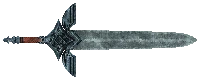
A melee weapon’s listed strength is only part of an attack. The yellow power meter near the top of the screen affects the damage of the swing you actually make: attacking with a fuller meter deals more damage. Running drains that meter quickly, so sprinting into range and attacking immediately has a cost.
Power and charge are different
Section titled “Power and charge are different”Ordinary melee attacks use the yellow meter to determine damage. Most attacks also support charging: hold the attack input and watch the meter fill blue. More blue charge increases attack damage as well.
These rules suggest a useful practice routine: approach without exhausting the yellow meter, make a deliberate attack, and watch the meter before the next swing. Then try a charged attack with the same weapon. This is a way to learn its timing, rather than a claim that every enemy gives you time to charge fully.
Every melee weapon has a secondary attack. Its function varies, so test it in a safe situation before relying on it in a difficult encounter.
Throwing weapons return
Section titled “Throwing weapons return”The enchanted dagger belt allows unlimited uses of throwing weapons. After a throw, the weapon takes time to return to its sheath; its speed attribute determines that return time. Collecting more copies of the same throwing weapon lets you store and throw more in succession before waiting for returns.
Equip throwing weapons in the status menu first. If a throwing weapon will not work, check for Sticky: that ailment prevents their use. Waiting for a return and being unable to throw because of a status effect are different problems.
Watch the weapon’s other meter
Section titled “Watch the weapon’s other meter”Magic weapons have special secondary attacks with their own charge meters. Some charge over time; others charge only through use in combat. Do not assume every magical secondary attack will recharge while you stand still.
Energy weapons consume a shared pool of cell energy. That pool refills slowly over time; additional energy cells increase the number of successive attacks possible. Switching between energy weapons does not give each weapon a separate pool.
Match damage types to resistance
Section titled “Match damage types to resistance”The Journal shows damage defenses after you defeat a foe. Weak means the matching damage type deals extra damage, Resist means it deals less, and Immune means that type deals no damage. Normal is the baseline.
Two enemies on the Isle of Neasied show why weapon choice matters. The Chicket is weak to pierce and resists blunt damage. The Skeletal Fighter is weak to blunt and resists slash. Carrying attacks with different damage types gives you a way to respond to both.
A foe’s attacks can also influence which cure you bring. The Giant Bat is listed with Heavy. Keep  Badu Powder in a quick slot if Heavy slows your movement and power recovery in Deimpo Mausoleum.
When your damage unexpectedly drops, check your power meter and whether Disease is active before concluding that the weapon itself became weaker.
Sources
Rules and names come from Queen’s Domain’s Windows in-game guide and item descriptions, identified in the page’s evidence record. Game text and icons: Freshly Baked Games LLC. Cover: Freshly Baked Games LLC / Future Friends Games, via Steam.
- Queen’s Domain — game tutorials, item descriptions and referenced icons — Extracted data · starter-2026-11-04
- Queen’s Domain Windows 1.01.03 — bestiary and landmarks — Extracted data · windows-1.01.03
- Queen’s Domain — official Steam cover artwork — Documentation · downloaded-2026-11-04

Unofficial fan wiki, not affiliated with Freshly Baked Games LLC / Future Friends Games. Game content belongs to its owners.
Comments & feedback
Share a tip or suggest a correction. Comments are public. Guest names are unverified; verified accounts show their public name. All language pages share this discussion. Please keep personal information private.