 GameWikiStation
 Battle Brothers
World map: settlements, houses and camps
Read a destination before committing to the road
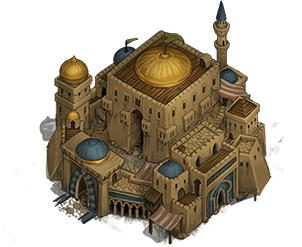
Section titled “Read a destination before committing to the road”The world map contains settlements to visit, factions to work for or anger, and hostile locations to scout or attack. Its names and layout change with each campaign. The pictures below are examples from the supplied 1.5.2.3 game archive, not a fixed map or a promise about a particular settlement’s stock or a camp’s defenders. Use campaign rules for company upkeep and contract rules before accepting work.
Settlements: where to recruit, trade and recover
Section titled “Settlements: where to recruit, trade and recover”Settlements differ in size, goods, recruits and available services. A fishing village, mining settlement and fortified seat can therefore solve different problems, but the buildings and offers shown in your town matter more than its name. Check its actual market, recruits, contracts and current situation before budgeting a purchase or planning a return trip.
The settlement reference compares 47 generated town archetypes by fixed and conditional facilities, base hiring-pool examples and recruit target ranges. Every archetype has hiring and a marketplace; a weaponsmith, armorsmith or fletcher depends on its script and conditions. The roster target starts at 3, 5 or 7 for small, medium or large northern towns, then responds to active attached sites, relations, situations and origin. It is not a guaranteed headcount on arrival.
| Game-art example | What to check on arrival |
|---|---|
 Northern settlement Northern settlement |
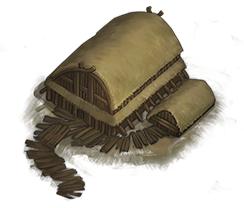
Food, supplies, recruits and the services presently available. Local contracts address nearby concerns. |
 Stronghold Stronghold |
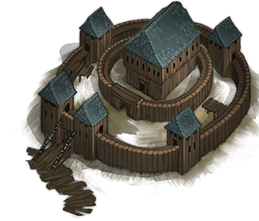
Military recruits and equipment may differ from a village; inspect the actual buildings and prices. |
| Southern city-state |
With Blazing Deserts, these cities bring their own services, markets and contracts. Do not assume a northern town’s stock or rules apply. |
Temporary settlement situations can change trade, food and recruitment during a campaign; the separate reference covers 44 scripted states and their current-build multipliers. Relations also affect how a settlement treats the company. A base item value in the database is not a live shop quote, and an item listed as sold somewhere is not guaranteed in today’s inventory.
Noble houses are ruling families, not a fixed map list
Section titled “Noble houses are ruling families, not a fixed map list”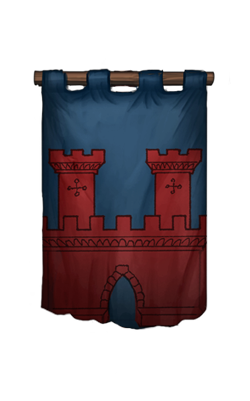
Noble houses have generated names, heraldry and traits in each campaign. They control groups of settlements and compete for influence; a settlement also has its own local interests. Work for a town’s leaders may differ from work for a house. Helping a faction through contracts can improve relations, while hostile acts such as attacking its caravan can damage them. Relations can affect prices, contract terms and recruitment, and severe hostility can shut off trade or turn troops against you.
Before taking a politically charged job, identify who offers it, whose interests it harms, and whether you depend on nearby settlements for food, repair or hiring. See the contract index for possible objectives; it does not predict a specific house’s next offer. Southern city-states have a distinct political setting under Blazing Deserts.
Enemy camps are fights on a place, not just a roaming party
Section titled “Enemy camps are fights on a place, not just a roaming party”The enemy-camp field guide compares the 28 camp classes referenced by the 1.5.2.3 faction-building scripts, including defender pools, fortifications and possible location loot. Use it to narrow the risk, then scout the camp that actually spawned in your campaign.
| Game-art example | What it tells you |
|---|---|
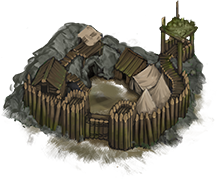 Bandit camp Bandit camp |
A hostile location with defenders and potential plunder; inspect the garrison and the approach. |
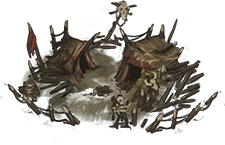 Orc camp Orc camp |
An orc encampment can be much harder than a small human hideout; prepare for its actual roster. |
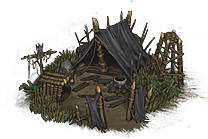 Goblin camp Goblin camp |
Look for fortifications and terrain before choosing the attack angle. |
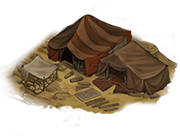 Nomad camp Nomad camp |
A southern example available with Blazing Deserts. |
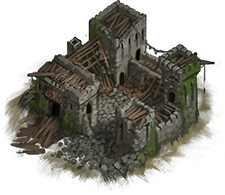 Ruins Ruins |
The image alone does not tell you whether this is an ordinary location or a unique encounter. |
Camp size, garrison and terrain change the battle. Some locations have fortifications; the world-map tooltip and engage screen indicate them. Attacking at the camp can mean palisades or other cover, while drawing its garrison out may change the terrain and defender count. Neither approach guarantees an easy fight. Compare the likely enemies in enemy encounters and the company’s supplies and injuries before committing.
Camps can contain valuable loot, and champions can carry named equipment, but no particular camp promises a named model. A named item is a generated roll, distinct from a fixed legendary reward. Compare named models with legendary locations: the latter have specific discovery and reward chains. A ruin is not automatically a legendary site just because it looks ancient.
Choose the next stop
Section titled “Choose the next stop”| If you need… | First check |
|---|---|
| Food, repairs or recruits | The nearest safe settlement’s actual services, situation and relations. |
| A contract | The issuer, objective, route, payment terms and possible opposition in contract types. |
| Named gear | Camp information, tavern leads and champion opportunities; inspect the actual item roll if you find one. |
| A camp fight | Garrison, fortifications and terrain in the camp guide, plus the enemy abilities you can counter. |
| A unique reward | The prerequisites and branches in legendary locations, not an ordinary camp rumor. |
Unofficial fan wiki, not affiliated with Overhype Studios. Game content belongs to its owners.
Comments & feedback
Share a tip or suggest a correction. Comments appear publicly right away; display names are unverified. All language pages share this discussion. Please keep personal information private.